What is Tamanna?
Tamanna is an NGO in Lebanon that grants wishes of children with critical illnesses to give them joy, strength and hope.
Fulfilling a child's wish provides an…
What is Tamanna?
Tamanna is an NGO in Lebanon that grants wishes of children with critical illnesses to give them joy, strength and hope.
Fulfilling a child's wish provides an escape from a difficult reality, restoring time for laughter. It allows the child to live a magical experience and to share unforgettable moments with his family.
Any child between 3 and 18 years with a critical illness may be eligible for a wish. Tamanna currently grants an average of three wishes a week.
Some granted wishes
A boy's wish to be a fire fighter for the day
A gitl's wish to be a princess.
A boy's wish to own a play station portable
The above photos are just a glimpse of what wishes Tamanna has granted. From having a wedding for a young couple at the Children Cancer Center of Lebanon, to introducing the children to celebrities (such as President Suleiman, PM Hariri, basketball teams) and unforgettable trips to Rome, Istanbul, Paris and Disney land to owning laptops and becoming a pilot, they have fulfilled many wishes for these children.
How you can help
There are several was you can help, most directly by donating on the Tamanna website. You can also help spreading the word about Tamanna to your friends and family by following and re-tweeting their twitter account @TamannaLeb and liking their page on facebook in hopes of raising awareness and getting donations to fulfill the dreams of children with critical or terminal illnesses.
James Blunt in Lebanon During his world tour, 5-time Grammy Award nominee English singer and songwriter James Blunt has agreed to fulfill a child's wish by performing in Lebanon on 27th of June. Not only that, all the profits from the concert will go to Tamanna to help fulfill even more wishes. This is a great way to support the cause while enjoying great music as well. To show your support at the concert, you can wear a white T-shirt or top. Check out the event page on facebook for more details.
You can buy the tickets from all Virgin Box Office branches at the following rates: VIP: 300,000 LBP, Zone A: 225,000 LBP, Zone B: 150,000 LBP, Zone C: 90,000 LBP, and Zone D: 45,000 LBP. Tickets also available online.
You can also help spread the word using a #tamanna hashtag on twitter and you might be a lucky winner of a few free tickets for the concert.
I will be there showing my support in white and live-tweeting the event, so I hope I see you there!
Last Sunday, during the demonstrations in the South near the Lebanese-Israeli borders to commemorate Nakba , Munib Masri, a petroleum studies student at the American University of …
Photo of Masri in South Lebanon via NOW Lebanon (from facebook)
Last Sunday, during the demonstrations in the South near the Lebanese-Israeli borders to commemorate Nakba, Munib Masri, a petroleum studies student at the American University of Beirut got severely injured after being shot by an Israeli bullet. Masri is Palestinian in origin, but also holds both the Jordanian and American citizenships.
Masri has underwent a couple of operations this week; "he is undergoing surgery today. He has already lost his left kidney and spleen in an earlier operation. His spine is also fractured, and he’s sustained injuries to his diaphragm, along with pieces of shrapnel lodged in his back." (NOW Lebanon)
In an e-mail addressed to the AUB community, Dr. Peter Dorman, President of AUB, writes:
"We are all shocked and saddened by this development, and our thoughts and hearts are with Munib and his family.We are appalled by the unrestrained use of deadly force against unarmed protesters that has left one of our students in critical condition"
It has been widely circulated since Monday that Masri is in need for donors of O- blood. He is currently being treated at the American University Hospital. For more information about the donation process, kindly contact Ms. Suha Afyoun, an AUB graduate who accompanied Masri during the demonstration, on +96176725203.
On behalf of the AUB community, I would like to wish Munib a speedy and smooth recovery and would like to salute him for his bravery.
AP : A Saudi judge has asked several hospitals in the country whether they could damage a man's spinal cord as punishment after he was convicted of attacking another man with a…
AP: A Saudi judge has asked several hospitals in the country whether they could damage a man's spinal cord as punishment after he was convicted of attacking another man with a cleaver and paralyzing him, the brother of the victim said Thursday.
Abdul-Aziz al-Mutairi, 22, was left paralyzed and subsequently lost a foot after a fight more than two years ago. He asked a judge in northwestern Tabuk province to impose an equivalent punishment on his attacker under Islamic law, his brother Khaled al-Mutairi told The Associated Press by telephone from there.
He said one of the hospitals, located in Tabuk, responded that it is possible to damage the spinal cord, but it added that the operation would have to be done at another more specialized facility. Saudi newspapers reported that a second hospital in the capital Riyadh declined, saying it could not inflict such harm.
Administrative offices of two of the hospitals and the court in Tabuk were closed for the Saudi weekend beginning Thursday and could not be reached for comment.
A copy of the medical report from the King Khaled Hospital in Tabuk province obtained by the AP said the same injury al-Mutairi suffers from can be inflicted on his attacker using a nerve stimulant, and inducing the same injuries in the same locations. The report was dated six months ago.
Saudi Arabia enforces strict Islamic law and occasionally doles out punishments based on the ancient legal code of an eye-for-an-eye. However, King Abdullah has been trying to clamp down on extremist ideology, including unauthorized clerics issuing odd religious decrees.
The query by the court, among the most unusual and extreme to have been made public in the kingdom, highlights the delicate attempt in Saudi Arabia to balance a push to modernize the country with interpretations of religious traditions that critics say are out of sync with a modern society.
The Saudi newspaper Okaz identified the judge as Saoud bin Suleiman al-Youssef.
The brother said the judge asked at least two hospitals for a medical opinion on whether surgeons could render the attacker's spinal cord nonfunctional. He and Saudi newspaper reports did not identify the attacker
Khaled al-Mutairi, 27, said the assailant was sentenced to 14 months in prison for the attack that paralyzed his younger brother, but he was released after seven months in an amnesty. He said the attacker then got a job as a school teacher .
"We are asking for our legal right under Islamic law," the brother said. "There is no better word than God's word — an eye for an eye."
A Saudi newspaper Okaz reported that a leading hospital in Riyadh — King Faisal Specialist Hospital — responded that it could not do the operation. It quoted a letter from the hospital saying "inflicting such harm is not possible," apparently refusing on ethical grounds.
Islamic law applied in Saudi Arabia allows defendants to ask for a similar punishment for harms inflicted on them. Cutting off the hands of thieves, for example, is common.
Under the law, the victim can receive a blood money to settle the case.
Khaled al-Mutairi said his family is not interested in blood money, and would be ready to send the attacker abroad to perform the operation if it were not possible in the kingdom.
Human rights group say trials in Saudi Arabia fall far below international standards. They usually take place behind closed doors and without adequate legal representation.
Those who are sentenced to death are often not informed of the progress of legal proceedings against them or of the date of execution until the morning on which they are taken out and beheaded.
Crucifying the headless body in a public place is a way to set an example, according to the kingdom's strict interpretation of Islam.
Amnesty International expressed concerns over the reports and said the rights group was contacting Saudi authorities for details.
"We are very concerned and we will appeal to the authorities not to carry out such a punishment," said Lamri Chirouf, the group's researcher on Saudi Arabia. Such measures are against international conventions against torture and international standards on human rights.
Chirouf said this was the first time Amnesty had heard of a punishment involving the damaging of a spinal cord.
"But it's hard to follow details of the Saudi justice system. People are sentenced in closed trials with no access to the public and no lawyers," he said.
According to Amnesty, in 2005, a convict in the kingdom had his teeth pulled out by a dentist because he had smashed another man's teeth out in a fight.
"We have also had cases of people sentenced to blindness because they have caused the blindness of another person," Chirouf said. "But never anything involving a spinal cord."
I encountered the funniest thing today. While walking alongside the American University Hospital with my friend, I was joking how hospitals don't have valet parking.
That didn…
I encountered the funniest thing today. While walking alongside the American University Hospital with my friend, I was joking how hospitals don't have valet parking.
That didn't last long. A few seconds later, we see a sign for VALET PARKING on the side of the road.
Well it might be a good idea for the emergency division where people don't have the time to find a parking, but to think about it clearly, are we really that lazy?
Lazy to the extent of having someone park the car at a hospital? And its not cheap either.
Personally, I believe that our culture should depend more on one's self. This type of laziness is what is holding us back from actually achieving something.
It is enough that we are bringing maids to our homes to cook the meals and raise up the children, but this? How low can we get? Next thing you know, people will start hiring professionals to help them go to the bathroom or shower.
REUTERS : Squirting insulin up the noses of patients with early forms of Alzheimer's disease showed signs of improving their memory, U.S. researchers said on Wednesday.
Pa…
REUTERS: Squirting insulin up the noses of patients with early forms of Alzheimer's disease showed signs of improving their memory, U.S. researchers said on Wednesday.
Patients who got the treatment for four months showed improvements in tests of memory recall that lasted for two months.
"We believe our results are very promising and they warrant future trials," said Dr. Suzanne Craft of the VA Puget Sound Health Care System and the University of Washington in Seattle, who presented her findings at a meeting of the Alzheimer's Association in Honolulu.
Alzheimer's disease is a fatal and incurable deterioration of the brain that affects 26 million people globally. It is the most common form of dementia.
Several studies have suggested that people with Alzheimer's have reduced levels of insulin in the brain, even in the earliest stages. Insulin is important for communication between brain cells and is needed for brain function.
Craft's team wanted to see what would happen if they delivered insulin directly to the brain.
They studied 109 non-diabetic patients with Alzheimer's disease or a precursor condition called mild cognitive impairment.
A third of the patients got a placebo and the other two-thirds received different doses of insulin that had been loaded into a nebulizer and squirted up their nose twice daily for four months.
Patients who got the lower dose of insulin showed significant improvements on all primary measures of thinking and memory and in a test of their ability to do daily activities.
In 15 insulin-treated patients who agreed to a spinal tap, the team found a link between improved memory and improvements in measurements of key proteins linked with Alzheimer's disease.
Craft said the treatment is a long way from being useful to patients, but the findings are strong enough to be studied in a large clinical trial.
Current Alzheimer's drugs only treat symptoms, but so far no drugs have been shown to improve memory in patients with Alzheimer's.
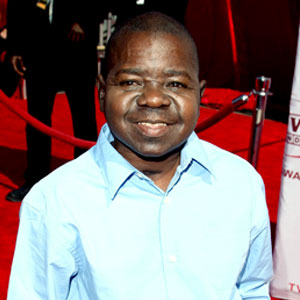
PROVO, Utah — Gary Coleman, the adorable, pint-sized child star of the smash 1970s TV sitcom "Diff'rent Strokes" who spent the rest of his life struggling on Hollywo…
PROVO, Utah — Gary Coleman, the adorable, pint-sized child star of the smash 1970s TV sitcom "Diff'rent Strokes" who spent the rest of his life struggling on Hollywood's D-list, died Friday after suffering a brain hemorrhage. He was 42.
Life support was terminated and Coleman died at 12:05 p.m. MDT with family and friends at his side, Utah Valley Regional Medical Center spokeswoman Janet Frank said.
Coleman, with his sparkling eyes and perfect comic timing, became a star after "Diff'rent Strokes" debuted in 1978. He played Arnold Jackson, the younger one of a pair of African-American brothers adopted by a wealthy white man.
"It's unfortunate. It's a sad day," said Todd Bridges, who played the older brother Willis. "It's sad that I'm the last kid alive from the show."
The series lives on thanks to DVDs and YouTube. But its equally enduring legacy became the troubles in adulthood of its former child stars.
Dana Plato, who played the boys' white, teenage sister, committed suicide in 1999. Bridges was tried and acquitted of attempted murder.
Coleman's popularity faded when the show ended after six seasons on NBC and two on ABC.
He remained estranged from his parents Sue and Willie Coleman, who said they learned about his hospitalization and death from media reports.
Sue Coleman said she wanted to reconcile and had been patiently waiting for her son to be ready.
"One of the things that I had prayed for was that nothing like this would happen before we could sit with Gary and (wife) Shannon and say, 'we're here and we love you,'" Sue Coleman said. "We just didn't want to push him."
She would not discuss the cause of the estrangement.
In 1989, when Gary Coleman was 21, she filed a court request trying to gain control of her son's $6 million fortune, saying he was incapable of handling his affairs. He said the move "obviously stems from her frustration at not being able to control my life."
Coleman chafed at his permanent association with "Diff'rent Strokes" but also tried to capitalize on it through minor reality shows and other TV appearances. His adult life also was marked with legal, financial and health troubles, suicide attempts and even a 2003 run for California governor.
Coleman suffered continuing ill health from the kidney disease that stunted his growth. He suffered the brain hemorrhage Wednesday at his Santaquin home, 55 miles south of Salt Lake City.
A statement from his family said he was conscious and lucid until midday Thursday, when his condition worsened and he slipped into unconsciousness. Coleman was then placed on life support.
"Diff'rent Strokes" debuted on NBC in 1978 and drew most of its laughs from the tiny, 10-year-old Coleman.
Race and class relations became topics on the show as much as the typical trials of growing up.
Coleman was an immediate star, and his skeptical "Whatchu talkin' 'bout?" — usually aimed at Willis — became a catchphrase.
In a 1979 Los Angeles Times profile, Sue Coleman said her son had always been a ham as a small child. He acted in some commercials before he was signed by T.A.T., the production company that created "Diff'rent Strokes."
The attention his starring role brought him could be a burden as well as a pleasure.
Coleman said in 2001 that he would do a TV series again, but "only under the absolute condition that it be an ensemble cast and that everybody gets a chance to shine."
"I certainly am not going to be the only person on the show working," he said. "I've done that. I didn't like it."
Coleman's kidney disease required dialysis and at least two transplants. As an adult, his height reached only 4 feet 8 inches.
He continued to get credits for TV guest shots and other small roles over the years. But in 2001 he said he preferred earning money from celebrity endorsements.
"Now that I'm 33, I can call the shots," he said. "And if anybody has a problem with that, I guess they don't have to work with me."
Coleman was among 135 candidates who ran in California's bizarre 2003 recall election to replace then-Gov. Gray Davis, whom voters ousted in favor of Arnold Schwarzenegger.
Coleman finished in eighth place with 12,488 votes, or 0.2 percent, just behind Hustler magazine publisher Larry Flynt.
Running for office gave him a chance to show another side of himself, he said at the time.
"This is really interesting and cool, and I've been enjoying the heck out of it because I get to be intelligent, which is something I don't get to do very often," he said.
Legal disputes dogged him repeatedly. And in a 1993 television interview, he said he had twice tried to kill himself by overdosing on pills.
He moved to Utah in fall 2005, and according to a tally in early 2010, officers were called to assist or intervene with Coleman more than 20 times in the following years. The responses included a call where Coleman said he had taken dozens of Oxycontin pills and wanted to die.
Some of the disputes involved his wife, Shannon Price, whom he met on the set of the 2006 comedy "Church Ball" and married in 2007.
In September 2008, a dustup with a fan at a Utah bowling alley led Coleman to plead no contest to disorderly conduct. The fan also sued him, claiming the actor punched him and ran into him with his truck.
Coleman was born Feb. 8, 1968, in Zion, Ill., near Chicago. His mother told Ebony his kidney disease was diagnosed when he was 2. He underwent his first transplant at age 5.
He attracted attention when he took part in some local fashion shows and people suggested he should get work performing in commercials, which he then did, she said.
She stayed with her son in California while he was making "Diff'rent Strokes," while her husband Willis, a pharmaceutical company worker, stayed behind in Illinois. [via]
During all police investigations it will be necessary to visit a strip club at least once. If being chased through town, you can usually take cover in a passing St. Patrick's D…
During all police investigations it will be necessary to visit a strip club at least once.
If being chased through town, you can usually take cover in a passing St. Patrick's Day parade - at any time of the year.
It's easy for anyone to land a plane providing there is someone in the control tower to talk you down.
The ventilation system of any building is the perfect hiding place. No one will ever think of looking for you in there and you can travel to any other part of the building you want without difficulty.
You're very likely to survive any battle in any war unless you make the mistake of showing someone a picture of your sweetheart back home.
Should you wish to pass yourself off as a German officer, it will not be necessary to speak the language. A German accent will do.
The Eiffel Tower can be seen from any window in Paris.
A man will show no pain while taking the most ferocious beating but will wince when a woman tries to clean his wounds.
If a large pane of glass is visible, someone will be thrown through it before long.
When paying for a taxi, don't look at your wallet as you take out a bill, just grab one at random and hand it over. It will always be the exact fare.
The Chief of Police will always suspend his star detective - or give him 48 hours to finish the job.
Any person waking from a nightmare will sit bolt upright and pant
Even when driving down a perfectly straight road it is necessary to turn the steering wheel vigorously from left to right every few moments.
It is always possible to park directly outside the building you are visiting.
A detective can only solve a case once he has been suspended from duty.
Most laptop computers are powerful enough to override the communication systems of any invading alien civilization.
It does not matter if you are heavily outnumbered in a fight involving martial arts - your enemies will wait patiently to attack you one by one by dancing around in a threatening manner until you have knocked out their predecessors.
A cough indicates a terminal illness.
A credit card or a paper clip can pick any lock in seconds - unless it's the door to a burning building with a child trapped inside.
A gang of highly-trained terrorists will always separate and search for an intruder making it easier to kill them off one-by-one.
An electric fence powerful enough to kill a dinosaur does no lasting damage to an eight-year-old child.
Any kid or dog can wonder through an artillery barrage without injury while half the outfit gets wiped out.
Assassins will always wait till the very last moment to assemble their complex sniper pistol that's the size of a rifle.
Bad guys kill their henchman for failing, yet never run out of loyal henchmen.
Characters shot with guns will fly backward, or upward and backward, through the air, the laws of physics not-withstanding.
Crashing cars always burst into flames.
Deranged killers only escape when a thunderstorm has knocked out all power and telephone lines.
Guns are like disposable razors - if you run out of bullets, just throw it away. You'll find another.
Having a job makes fathers forget their sons' birthdays.
High-class strippers with a heart of gold can operate heavy machinery.
Honest and hard-working policemen are traditionally gunned down with days of their retirement.
If a killer is lurking in your house, it's easy to find him. Just run a bath (even in the middle of the day) and then look in the bathroom mirror. There he is.
If a main character dies, his sweetheart back home will have a nightmare at that exact moment.
If a phone line is broken, the best way to restore communication is to frantically beat the cradle while yelling, "Hello? Hello?"
If a soldier tries to look up an old buddy who was transferred to different unit, the buddy will be dead or will die shortly there after.
If the person you are chasing has just taken the elevator down from the 20th floor, you can get to the street first by taking the stairs.
If you need to diffuse a bomb, don't worry about which wire to cut. You always choose the right one.
If you're a woman who has just finished a steamy love-making session, you will pull the sheets up to your neck.
If you're ever caught up in a misunderstanding that could be quickly cleared up by a simple explanation, keep your mouth shut.
In all high school or college classrooms, the teacher or professor will always be interrupted in mid-sentence by the end-of-class bell.
In emergencies, anyone can fly a helicopter.
In the event of a car chase, two men will carry a large pane of glass through the streets for you to drive through.
Never assume that anyone is dead unless their death was spectacular.
No matter how dead you think you've killed a bad guy, he can still get up three more times. Therefore, leave his gun in his hand while you turn away to comfort the girl.
One man has a better chance of shooting twenty men than twenty men have of shooting one man.
Television news always features a story that affects you personally, at the precise moment you turn on the TV.
The first shot or burst of fire from a bad guy always misses and is there merely to announce that a fight has be-gun.
When confronted by an evil international terrorist, sarcasm and wisecracks are the best weapons.
When they are alone, foreigners speak English to each other.
Whichever tree branch the hero has perched on, the villain will invariably pause under it.
Women are always too hysterical to do what the hero instructs. He has to help her/force her/knock her out.
Women make a noise at the precise moment the villain is close enough to hear.
A Taiwanese man with a history of high blood pressure has died of a stroke that an emergency room doctor says was likely triggered from over-excitement while watching the 3D bloc…
A Taiwanese man with a history of high blood pressure has died of a stroke that an emergency room doctor says was likely triggered from over-excitement while watching the 3D blockbuster Avatar, AFP reports.
The 42-year-old man, who suffered from hypertension, was rushed to the hospital after he began feeling ill during the screening of the movie earlier this month in the Taiwanese city of Hsinchu, AFP says.
The man identified only as Kuo was unconscious when he got to Nan Men General Hospital where a scan showed that his brain was hemorrhaging, Dr. Peng Chin-Chih, an emergency room doctor, told AFP.
"It's likely that the over-excitement from watching the movie triggered his symptoms," the doctor told AFP.
A coroner has ruled that Chicago Bears defensive end Gaines Adams died of a heart attack, according to ESPN's Adam Schefter's posting on his Twitter account. Adams, 26, was…
A coroner has ruled that Chicago Bears defensive end Gaines Adams died of a heart attack, according to ESPN's Adam Schefter's posting on his Twitter account.
Adams, 26, was pronounced dead at 8 a.m. Sunday at a Greenwood County, South Carolina hospital, according to the Greenville News.
Selected as the fourth overall pick in the 2007 NFL Draft, Adams joined the Tampa Bay Buccaneers.
Apparently Adams had an enlarged heart that caused cardiac arrest, according to tweets posted at Schefter and Jason La Canfora's Twitter pages. On Thursday, Southern Indiana senior Jeron Lewis also had an enlarged heart, like Adams, that led to his cardiac arrest during a basketball game at Kentucky Weslyn College.
Adams, who played football at Clemson, was considered by many to be a bust at the NFL level and was traded from the Bucs to the Bears last October.
The former 2006 ACC Defensive Player of the Year registered 93 tackles, 13 1/2 sacks and two interceptions in four seasons (three with Tampa Bay, one with Chicago).
In his final season with the Bears, Adams played in 10 games and collected seven tackles, one pass defended and one forced fumble.
Adams is the second NFL player to pass away this season. Cincinnati Bengals wideout Chris Henry died on Dec. 17 following a fall from a moving pickup truck, which was driven by his fiance who he was having an argument with prior to the accident.
Millions of people suffering from malaria now have new hope after British scientists unlocked the genetic map of the plant used to cure the disease. Scientists from the University …
Millions of people suffering from malaria now have new hope after British scientists unlocked the genetic map of the plant used to cure the disease.
Scientists from the University of York have confidently predicted they will have high-yielding anti-malaria crops available for wide spread plantation in developing countries within two years.
The discovery of the genetic map of the medicinal herb Artemisia annua has been hailed as a significant breakthrough that could save countless lives.
Researchers said the new plants they will breed will be given to poor farmers who can use them to grow a cash crop that could help build up fragile economies.
The research has been funded by the Bill and Melinda Gates Foundation.
Malaria kills at least one million people every year even though it can be prevented and treated.The most effective drugs to treat the disease are Artemisinin Combination Therapies.More funding has become available to deliver these treatments which are expected to reach 200 million each year by 2012.
But there is currently a shortage of the plant Artemisia annua which is a key ingredient in the drugs. The scientists from University of York said they hope to be able to meet the new demand within two to three years. They have published the the first genetic map of this species, plotting the location on the plant's genome of genes, traits and markers associated with high performance in the latest issue of the journal Science.
The genetic map will enable scientists to recognise young plants as high performers from their genetics.
It will also inform the selection of suitable parent plants for breeding experiments.
The map has been confirmed in glasshouse experiments that found the top-performing plants had higher frequencies of genetic indicators for high yield.
A Polish building contractor working at London's Great Ormond Street Children's Hospital was given his marching orders after a security guard caught him having sex with a …
A Polish building contractor working at London's Great Ormond Street Children's Hospital was given his marching orders after a security guard caught him having sex with a Henry Hoover, the Sun reports.
The Henry HooverThe unnamed pervert was supposed to be locking up the site, at hospital admin offices, but was instead discovered in the staff canteen "naked and on his knees with the smiling cleaner". The "horrified" guard told the chap to "clean himself and the hoover", then ejected him from the premises. The unnamed vacuum-molestor later told his bosses he was actually cleaning his underwear, describing this habit as "a common practice in Poland". His employer, HG Construction, was having none of it. The company said: "That behaviour is not acceptable, though it gave a few people a laugh."
Live flies are emerging out of a perforation in the lower part of the body of a 13-year-old boy in Bengal in a bizarre — but not unknown — phenomenon.
Admitted in Burdwan Medical…
Live flies are emerging out of a perforation in the lower part of the body of a 13-year-old boy in Bengal in a bizarre — but not unknown — phenomenon.
Admitted in Burdwan Medical College Hospital since last Saturday, Chandan Goswami stunned doctors as the flies began to come out of a part of his crotch to take wing. Some of the flies were caught by the boy’s parents.
“This is a condition called myiasis in which a human or animal body, dead or alive, is invaded by the larvae of particular types of flies,” said an excited Snehansu Pan, the surgeon taking care of Chandan.
After nearly a week of Chandan’s admission, this afternoon Pan found out what was happening to his patient.
“This is a very, very rare condition and we are trying to figure out how the fly invaded the boy’s body and then we will determine how to treat him,” he said.
Myiasis is prevalent in central and southern America, but mostly in animals. Experts said the larvae invade the human body either “accidentally” or “opportunistically”. If eggs are deposited on human skin, they can enter the host through body portals or via mucous membranes or through the mouth. After hatching, the larvae emerge from the host’s skin through a “breathing pore” and, once out, pupate.
In this case, they have grown wings inside Chandan’s body.
“No one believed me when I told them these flies were emerging, three or four flew off from a small hole. I was suffering from aches in my lower belly before the insects appeared,” Chandan said from his hospital bed. He lives in a village in Birbhum.
Even the principal of the medical college here, Bijoy Mukherjee, walked away shaking his head after examining Chandan. “It is definitely some kind of a fly, it seems they are hatching inside the boy, we have to find out how,” Mukherjee, a microbiologist, said.
Once the larvae are located they will be removed by surgery.
Ashok Roy, the head of paediatric surgery at Nil Ratan Sarkar Medical College and Hospital in Calcutta, said he had heard about this condition but never seen it happen. “These maggots are usually removed from beneath the surface of the skin by minor surgery, but whole flies emerging, it must be very rare.”
Chandan’s mother Alpana said the doctors had decided to release her son until they saw the flies emerge on Wednesday. He was in severe pain. “When I first saw what was happening to my boy, I was petrified,” she said.
Ever wonder what happens to all the fat sucked out during liposuction? If you feared it was going to waste, worry no more. According to a study in the Proceedings of the National …
Ever wonder what happens to all the fat sucked out during liposuction? If you feared it was going to waste, worry no more. According to a study in the Proceedings of the National Academy of Sciences, the gelatinous material can be converted into embryonic stem cells.
“We’ve identified a great natural resource,” said Stanford surgery professor and co-author of the research, Michael Longaker. The physician also called lipo leftovers “liquid gold.”
Changing regular adult stem cells to embryonic stem cells poses a number of problems. Four genes, known as Yamanaka factors, need to be expressed to change adult cells into induced pluripotent stem cells (iPS), which mostly resemble embryonic stem cells. Doctors often experiment with skin cells for this procedure. But like some adults, mature cells are resistant to change. It takes skin cells about three weeks in the lab to convert to iPS cells.
The Stanford researchers looked at adipose, or immature fat cells, which lie within a labyrinth of fat and collagen in our bodies. These fat cells are already expressed at higher levels and only two of the four Yamanaka genes need to be converted, which turns the fat cells into iPS almost immediately. Researchers are also excited because these cells easily convert to iPS without the aid of feeder cells, which are cells from mice that enable stem cell growth outside the body. Researchers then can reprogram iPS cells into bone, muscle, organ, or brain cells. As far as scientists know, iPS cells are the same as embryonic stem cells and will be as useful in treatments.
French court convicts woman after 4-year-old boy suffers bruised cheek CAEN, France - A French court has fined a preschool teacher $1,450 for biting the cheek of an allegedly unru…
French court convicts woman after 4-year-old boy suffers bruised cheek
CAEN, France - A French court has fined a preschool teacher $1,450 for biting the cheek of an allegedly unruly 4-year-old during a bathroom break.
The court in the Normandy town of Lisieux handed down the fine Wednesday over the March 2007 incident in the nearby town of Houlgate.
The teacher had denied the boy's claim and said he had been misbehaving. The ruling came after a medical report showed a bruise on his face.
The school reprimanded the 48-year-old teacher weeks afterward.
In keeping with French judicial practice, the court didn't identify the woman because she is still teaching.
The Food and Drug Administration on Tuesday approved vaccines designed to protect against the H1N1 influenza virus, a key step before starting a vaccination campaign.
The approval…
H1N1 Flu Virus under an electron microscope
The Food and Drug Administration on Tuesday approved vaccines designed to protect against the H1N1 influenza virus, a key step before starting a vaccination campaign.
The approval was announced by Health and Human Services Secretary Kathleen Sebelius at a hearing that was held by the House Energy and Commerce Committee.
An FDA spokeswoman said the agency approved vaccines made by a unit of Sanofi-Aventis SA, Novartis AG, CSL Ltd. and AstraZeneca PLC's MedImmune unit.
MedImmune makes a vaccine in the form of mist delivered through the nose rather than a shot.
Ms. Sebelius said a large-scale vaccination program will begin in mid-October.
The U.S. has spent more than $1 billion to purchase and administer a total of 195 million H1N1 vaccine doses being made by five companies, including GlaxoSmithKline PLC. Ms. Sebelius said that the agency's officials are still working on that application.
About 40 million to 50 million vaccine doses will be available by the middle of next month and will be distributed to each state's health department officials.
Shipments of vaccines are expected to last for several weeks as additional vaccines are produced.
Initially, the H1N1 vaccine will be reserved for health-care workers, pregnant women, children and young adults, who have been disproportionately affected by the new virus.
So far, the new flu strain hasn't sickened very many Americans age 60 and older—possibly because they have immunity from similar viruses that caused past influenza pandemics.
The U.S. has seen additional cases of H1N1 influenza as schools resumed classes in recent weeks.
Ms. Sebelius also said it is likely that just one dose of the vaccine will be needed to protect adults against the virus, based on preliminary study results of some of the vaccines released last week.
Data on children won't be available until next week at the earliest.
Health officials had expected two doses might be needed for H1N1 vaccines, as is the case for young children who receive a seasonal influenza shot for the first time.
The first vaccine dose is intended to "prime" a person's immune system so that it can recognize a new type of virus, while the second dose helps the immune system produce enough antibodies to fight against the virus.
The FDA said that people who have allergies to chicken eggs shouldn't receive the H1N1 vaccine, as is the case with seasonal influenza vaccines, because chicken eggs are used during the vaccine-production process.
"I'd say five years is pretty wishful thinking," ... "Two years seems likely if you're going to believe statistics. I want to last until they find a cure, w…
"I'd say five years is pretty wishful thinking," ... "Two years seems likely if you're going to believe statistics. I want to last until they find a cure, which means I'd better get a fire under it"
-- Patrick Swayze
Patrick Swayze, the balletically athletic actor who rose to stardom in the films “Dirty Dancing” and “Ghost” and whose 20-month battle with advanced pancreatic cancer drew wide attention, died Monday. He was 57.
His publicist, Annett Wolf, told The Associated Press in Los Angeles that Mr. Swayze died with family at his side.
Mr. Swayze’s cancer was diagnosed in January 2008. Six months after that, he had already outlived his prognosis and was filmed at an airport, smiling at photographers and calling himself, only half-facetiously, “a miracle dude.” He even went through with plans to star in “The Beast,” a new drama series for A&E, and filmed a complete season while undergoing treatment. Mr. Swayze insisted on continuing with the series.
“How do you nurture a positive attitude when all the statistics say you’re a dead man?” he said to Bill Carter of The New York Times last October. “You go to work.”
The show, on which he plays an undercover F.B.I. agent, had its premiere in January and earned him admiring reviews.
A week before the series began, Mr. Swayze was the subject of a one-hour “Barbara Walters Special” on ABC, talking about his illness. “I keep my heart and my soul and my spirit open to miracles,” he told Ms. Walters. But he said he was not going to pursue every experimental treatment that came along. If he were to “spend so much time chasing staying alive,” he said, he wouldn’t be able to enjoy the time he had left. “I want to live,” he said.
LOS ANGELES (Reuters) – The world's oldest person, a woman who was born in 1894 and gained a measure of fame when she voted for Barack Obama for U.S. president, died on Friday…
LOS ANGELES (Reuters) – The world's oldest person, a woman who was born in 1894 and gained a measure of fame when she voted for Barack Obama for U.S. president, died on Friday at the age of 115.
Gertrude Baines died peacefully in her sleep sometime between 6 a.m. and 7 a.m. local time (1300 and 1400 GMT) at the Western Convalescent Hospital in Los Angeles, where she had spent the past decade of her life.
"She's a very dignified lady," Emma Camanag, the hospital's administrator, told Reuters. "It has truly been a blessing and an honour for us to take care of her over the last 10 years and we will greatly miss her. It's just like we lost a relative."
Baines had no living relatives, Camanag said, but was popular at the home and at her church, where she attended services every Sunday until she became too ill to leave her room.
Camanag said parishioners at the church often visited Baines, who was born on April 6, 1894 in Shellman, Georgia, and became the world's oldest person when 115-year-old Maria de Jesus of Portugal died in January.
Japan's Kama Chien, 114, is now the oldest person in the world.
As a Black woman who grew up in the South during the time of Jim Crow laws, which required Blacks to use separate and often inferior public facilities, Baines was celebrated in the media when she voted last November for Obama, the first African American elected president of the United States.
She had only voted once previously, for John F. Kennedy, and told the Los Angeles Times at the time that she supported Obama "because he's for the coloured." She kept a signed picture of Obama on her wall, the Times reported.
Baines, who was born during the administration of Grover Cleveland, married young and later divorced. Her only child, a daughter, was born in 1909 and died of typhoid at the age of 18.
She worked as a maid in Ohio before moving to Los Angeles and lived on her own until she was well over 100.
According to the Times, when Baines was asked by reporters her secret for living a long life, she would reply "Ask God."
Michael Jackson is a icon in every way shape or form and the news has came in that he has died at the age of 50. Michael Jackson suffered from cardiac arrest this afternoon while …
Michael Jackson is a icon in every way shape or form and the news has came in that he has died at the age of 50. Michael Jackson suffered from cardiac arrest this afternoon while he was in his Holmby Hills home. By the time that the ambulance responded to a call at his Los Angeles home about 12:30 p.m., he was already without a pulse and they were not able to get one back. Michael Jackson was born on August 29, 1958 and first got popular as part of the group The Jackson 5. He left to go on his own as a solo artist where he became known as "The King Of Pop" after selling millions and millions of records worldwide. There is million of fans that still show up to see Michael Jackson anywhere he goes. The world has lost a great icon today and there is bound to be millions of fans that are going to be heartbroken for years to come. Michael was responsible for raising millions and millions of dollars for different charities on top of being a musical legend..