I found this picture posted here and it got me thinking. Ah, Disney, you always seem to spread the worst possible message to young girls out there. There's always a prince out…
I found this picture posted here and it got me thinking. Ah, Disney, you always seem to spread the worst possible message to young girls out there. There's always a prince out there that must "save" us. If they really want to teach young children something new, they should make a "Beauty and the Beast" where the genders were switched.
They have improved in more recent movies, but the above characters are "classic" characters and such movies will probably be viewed over and over for many years to come.
So I was studying today for my information systems final, and I was reading this case in the book about social networking sites and the work environment, and I found it severely i…
So I was studying today for my information systems final, and I was reading this case in the book about social networking sites and the work environment, and I found it severely ironic that someone lost his job due to blogging. OSB, is that supposed to be a hint? MIS Book, I'm on to you! :P
PROVO, Utah — Gary Coleman, the adorable, pint-sized child star of the smash 1970s TV sitcom "Diff'rent Strokes" who spent the rest of his life struggling on Hollywo…
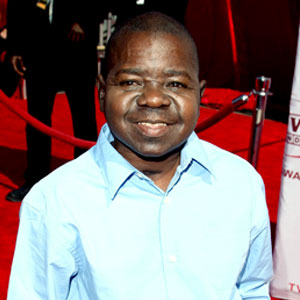
PROVO, Utah — Gary Coleman, the adorable, pint-sized child star of the smash 1970s TV sitcom "Diff'rent Strokes" who spent the rest of his life struggling on Hollywood's D-list, died Friday after suffering a brain hemorrhage. He was 42.
Life support was terminated and Coleman died at 12:05 p.m. MDT with family and friends at his side, Utah Valley Regional Medical Center spokeswoman Janet Frank said.
Coleman, with his sparkling eyes and perfect comic timing, became a star after "Diff'rent Strokes" debuted in 1978. He played Arnold Jackson, the younger one of a pair of African-American brothers adopted by a wealthy white man.
"It's unfortunate. It's a sad day," said Todd Bridges, who played the older brother Willis. "It's sad that I'm the last kid alive from the show."
The series lives on thanks to DVDs and YouTube. But its equally enduring legacy became the troubles in adulthood of its former child stars.
Dana Plato, who played the boys' white, teenage sister, committed suicide in 1999. Bridges was tried and acquitted of attempted murder.
Coleman's popularity faded when the show ended after six seasons on NBC and two on ABC.
He remained estranged from his parents Sue and Willie Coleman, who said they learned about his hospitalization and death from media reports.
Sue Coleman said she wanted to reconcile and had been patiently waiting for her son to be ready.
"One of the things that I had prayed for was that nothing like this would happen before we could sit with Gary and (wife) Shannon and say, 'we're here and we love you,'" Sue Coleman said. "We just didn't want to push him."
She would not discuss the cause of the estrangement.
In 1989, when Gary Coleman was 21, she filed a court request trying to gain control of her son's $6 million fortune, saying he was incapable of handling his affairs. He said the move "obviously stems from her frustration at not being able to control my life."
Coleman chafed at his permanent association with "Diff'rent Strokes" but also tried to capitalize on it through minor reality shows and other TV appearances. His adult life also was marked with legal, financial and health troubles, suicide attempts and even a 2003 run for California governor.
Coleman suffered continuing ill health from the kidney disease that stunted his growth. He suffered the brain hemorrhage Wednesday at his Santaquin home, 55 miles south of Salt Lake City.
A statement from his family said he was conscious and lucid until midday Thursday, when his condition worsened and he slipped into unconsciousness. Coleman was then placed on life support.
"Diff'rent Strokes" debuted on NBC in 1978 and drew most of its laughs from the tiny, 10-year-old Coleman.
Race and class relations became topics on the show as much as the typical trials of growing up.
Coleman was an immediate star, and his skeptical "Whatchu talkin' 'bout?" — usually aimed at Willis — became a catchphrase.
In a 1979 Los Angeles Times profile, Sue Coleman said her son had always been a ham as a small child. He acted in some commercials before he was signed by T.A.T., the production company that created "Diff'rent Strokes."
The attention his starring role brought him could be a burden as well as a pleasure.
Coleman said in 2001 that he would do a TV series again, but "only under the absolute condition that it be an ensemble cast and that everybody gets a chance to shine."
"I certainly am not going to be the only person on the show working," he said. "I've done that. I didn't like it."
Coleman's kidney disease required dialysis and at least two transplants. As an adult, his height reached only 4 feet 8 inches.
He continued to get credits for TV guest shots and other small roles over the years. But in 2001 he said he preferred earning money from celebrity endorsements.
"Now that I'm 33, I can call the shots," he said. "And if anybody has a problem with that, I guess they don't have to work with me."
Coleman was among 135 candidates who ran in California's bizarre 2003 recall election to replace then-Gov. Gray Davis, whom voters ousted in favor of Arnold Schwarzenegger.
Coleman finished in eighth place with 12,488 votes, or 0.2 percent, just behind Hustler magazine publisher Larry Flynt.
Running for office gave him a chance to show another side of himself, he said at the time.
"This is really interesting and cool, and I've been enjoying the heck out of it because I get to be intelligent, which is something I don't get to do very often," he said.
Legal disputes dogged him repeatedly. And in a 1993 television interview, he said he had twice tried to kill himself by overdosing on pills.
He moved to Utah in fall 2005, and according to a tally in early 2010, officers were called to assist or intervene with Coleman more than 20 times in the following years. The responses included a call where Coleman said he had taken dozens of Oxycontin pills and wanted to die.
Some of the disputes involved his wife, Shannon Price, whom he met on the set of the 2006 comedy "Church Ball" and married in 2007.
In September 2008, a dustup with a fan at a Utah bowling alley led Coleman to plead no contest to disorderly conduct. The fan also sued him, claiming the actor punched him and ran into him with his truck.
Coleman was born Feb. 8, 1968, in Zion, Ill., near Chicago. His mother told Ebony his kidney disease was diagnosed when he was 2. He underwent his first transplant at age 5.
He attracted attention when he took part in some local fashion shows and people suggested he should get work performing in commercials, which he then did, she said.
She stayed with her son in California while he was making "Diff'rent Strokes," while her husband Willis, a pharmaceutical company worker, stayed behind in Illinois. [via]
Remember a while back, I was writing for Align, the business school newspaper at AUB, and then dramatically got fired for expressing my opinion on my personal blog? ( more info ) Wel…
Remember a while back, I was writing for Align, the business school newspaper at AUB, and then dramatically got fired for expressing my opinion on my personal blog? (more info)
Well get this... They still published my articles online, without mentioning my name. I'm pretty sure this breaks some copyright laws or something. What crime did I commit for them not to mention my name? Last time I checked, I didn't murder anyone.
Well at least google knows the truth!
It's bad enough that they haven't paid me yet for the two months I worked there. Well, to be fair, none of the other staff writers got their pay checks yet! Imagine that. People working for almost four months now haven't been paid a dime. I am seriously glad that I got "fired" early on. Way to be proffessional, Align!
Here's a few photos from the AUB Yearbook reception dinner that occurred on Monday May 24. I am the associate editor in chief of the 09-10 edition of the AUB Campus yearbook, …
Here's a few photos from the AUB Yearbook reception dinner that occurred on Monday May 24. I am the associate editor in chief of the 09-10 edition of the AUB Campus yearbook, so I got to say a little speech!
So that's me giving the speech!
This is the majority of the members of the yearbook team.
A photo with the greatest friends :)
Maurice, our editor in chief, giving his speech.
Cutting the cake with Dean Kisirwani and distinguished guests.
With members of the AUB Student Affairs Office: (L-R) Rania Murr, Dr. Maryam Ghandour, Therese Miri'b, Nisrine Fattouh, Mohammad Hijazi, Hiba Hamade, Maurice Salem, Ramza Saad
Don't Ask!
Here's my thank you speech that I gave on that wonderful night:
Good evening.
Dean Kisirwani, Dr. Nizameddine, Dr. Talhouk, distinguished guests, fellow members of the campus yearbook team. I would like to thank you wholeheartedly for being with us tonight to celebrate the yearbook team.
I will start off this delightful evening by introducing the Campus Yearbook editorial cabinet for this year.
Our Editor in Chief, Maurice Salem
Nadine Gaith, associate editor in chief
Mohamad Chehab, our Team Coordinator
and myself, Mohammad Hijazi, also associate editor in chief.
First of all, I would like to thank our faculty advisor Dr. Rabih Talhouk who has demonstrated astonishing commitment to the AUB Campus yearbook. Currently, Dr. Talhouk is working not only on our edition of the yearbook, but also on the previous two editions which have been delayed for technical reasons.
I would also like to thank the Dean's office and the Office of Student Activities for always supporting us and helping us out every step of the way.
Our team this year consists of forty dedicated members distributed among seven teams, each of which plays a crucial role towards successfully completing the yearbook. I will briefly introduce these teams now for a chance to get to know how the yearbook team is organized.
The bulk of yearbook is controlled by two teams:
- The faculties and schools team, whose editor is Camille Salem, collects photos of all the undergraduate and graduate students, and allows the students change their ID photos or remove them from the yearbook. Most importantly this team also oversees the graduating students photo-shoot, that welcomed more than 1,200 graduating students this year.
- The adminstrative departments team, whose editor is Dahlia Al Assi. The main role of this team is to collect photos of faculty, staff and administration, as well as letters from key figures at AUB, such as the president, the provost, and the deans.
Other teams are just as crucial. These teams include:
- The photography team, whose editor is Reva Al Kassis, works very hard to take photos of sport events, campus events and even important people at AUB. This team has to communicate very well with the rest of the team in to collect these information smoothly.
The sports team, whose editor is Lojain Kamel, collects photos of the AUB varsity teams as well as photos of events such as championships and important games.
The campus life team, whose editor is Maysam Al Kai, manages photos of major campus events such as elections, ceremonies, concerts, and Outdoors. We are proud that this year this team has organized and set-up a funny photo booth in the Outdoors festival during this past weekend.
The campus activities team, whose editor is Maria Jarawan, collects photos of clubs and societies, in addition to non-administrative departments at AUB such as the museums, as well as USFC and SRC.
Yet, the escence of the yearbook is the design team which consists this year of 5 dedicated graphic designers who designed more than ten amazing posters for the graduating students photo-shoot, as well as the yearbook logo. They are currently working on finalizing the design of the book.
On behalf of the editorial cabinet, I would like to thank the editors and their teams immensly for their great work and commitment to the team. Hopefully, the high standards that we set this year will remain as guidelines for upcoming yearbook teams.
I will leave the floor now to Maurice who will talk more about our accomplishments this year.
(L-R) Maya Terro, Mohammad Hijazi, Forat Al Hattab, Jawad Kamal, Rima Akoum, Camille Salem, and Farah Salhab
The dance floor.
(L-R) Nadine Ghaith, Mayssam Al Kai, Forat Al Hattab, Maria Jarawan, Camille Salem, M Waleed Noaman, Mohammad Hijazi, Nour Tauk and Sara Abu Zaki
I was surprised this past week with such HUGE publicity from media internationally and regionally, shedding the light on several American figures that have appeared to belong to A…
I was surprised this past week with such HUGE publicity from media internationally and regionally, shedding the light on several American figures that have appeared to belong to Arab familiar origins.
Recently the newly elected and Lebanese-born Miss USA Rima Fakih
inspired researchers to "dig up" through prominent names and introduce internationally recognized people from Arab roots
Kippreport had issued the following list fully quoted below; this is merely a sample of unknown Arab Americans. Intrestingly, we prove to care about the 15 minute famous Arabs and neglect to encourage and celebrate the accomplishment of so many established men and women who have given the world successful experiences, such legacies that could enlighten and honour our lives for generations to come...
Let's begin with:
Steve Jobs
Steve Jobs, the charismatic CEO of Apple, is of Syrian biological descent – although he has never publically acknowledged this.
According to Fortune magazine, Jobs’ biological parents were Abdulfattah ‘John’ Jandali, a Syrian, and Joanne Simpson, both unwed and aged just 23 when Steve was born. Simpson and Jandali put the child up for adoption, and he was brought up by Paul and Clara Jobs.
Jobs dropped out of college in the 1970s to found Apple. He later bought Pixar studios from George Lucas in 1986 and the studio went on to create cinema hits like Finding Nemo and Toy Story. Pixar was sold to Disney in 2006 for a reported $7.4 billion in stock. His net worth is estimated at more than $5 billion, with Forbes ranking him #136 on the 2010 list of the world’s richest people.
Paula Abdul
Grammy Award winner and noted choreographer, Paula Abdul had two-number one albums, six number one singles, and a slew of MTV, Emmy, and People’s Choice Awards.
The child of a Syrian immigrant, Paula garnered international fame with worldwide album sales estimated at over 30 million records. Paula has her own star on Hollywood’s Walk of Fame.
Fayez Sarofim
Egyptian American Fayez Sarofim was listed as one of the world’s richest men in 2007 by Forbes magazine, who at that time estimated his net worth at $1.5 billion.
Son of a wealthy Egyptian cotton farmer, he was born in Egypt and immigrated to the US in 1946. He became a naturalized citizen in 1961. He founded Fayez Sarofim and Co., an investment bank in Houston, after earning degrees at prestigious University of California-Berkeley and Harvard. He has a long legacy of philanthropic efforts aimed at supporting cancer research, the performing arts, ballet, theater, and opera.
He reportedly made his fortune in long-term investments on companies like Procter & Gamble and Phillip Morris.
Ralph Nader
Widely regarded as one of America’s most influential civic activists and social critics, Ralph Nader garnered national fame as a hardnosed consumer advocate and attorney. He stood as a candidate for President of the United States four times.
Born in Connecticut of Lebanese immigrants, his parents Nathra and Rose Nader ran a bakery and restaurant. Nader graduated with distinction from Princeton and Harvard Universities. He is the founder of many influential consumer advocacy groups, and is credited with numerous federal consumer protection laws concerning environmental standards, motor vehicle safety and the Freedom of Information Act.
The Zogby Brothers
Sons of Lebanese Catholic immigrants, the Zogby brothers are perhaps the most prominent Arab Americans in the US – not least because James (pictured, right) is the founder and president of the Arab American Institute. James, who was born in New York in 1945, is an academic and political consultant, and also a senior analyst at his brother’s polling firm, Zogby International.
John (pictured, left)is the founder, president and CEO of Zogby International, a polling firm known for both phone polling and interactive, Internet-based polling.
John J. Mack
John J. Mack was born in 1944, the sixth son to Lebanese immigrants of Greek Orthodox origin. He has been chairman of the Board of Morgan Stanley since June 2005, and was chief executive of the same firm from June 2005 to December 2009. He previously had spent nearly 30 years at the firm in various positions, most recently as president, chief operating officer and a director.
Tony Shalhoub
Tony Shalhoub, an American actor of Lebanese descent, is perhaps best known for his role as Adrian Monk – the San Francisco detective diagnosed with obsessive-compulsive disorder. Shalhoub’s diverse acting credits include small screen, theater, and film work. He is also credited with helping to establish The Arab-American Filmmaker Award Competition in 2005. A native of Green Bay Wisconsin, Shalhoub graduated from University of Southern Maine, where he first studied acting as a theater major. He went on to earn a Master’s in Fine Arts at Yale School of Drama.
Shalhoub has won multiple prestigious acting awards, including Emmy Awards, Screen Actors Guild Awards, and a Golden Globe Award.
Anthony Shadid
Anthony Shadid is a two-time Pulitzer prize winning journalist of Lebanese ancestry. Shadid studied journalism and political science at the University of Wisconsin-Madison, where he earned his degree.
Shadid was recognized by Pulitzer judges for his “rich, beautifully written series on Iraq as the United States departs and its people and leaders struggle to deal with the legacy of war and to shape the nation’s future.”
Currently foreign correspondent for the New York Times, Shadid is a native of Oklahoma City, Oklahoma. He is former Islamic affairs correspondent for the Washington Post. In 2002, Shadid was shot in the shoulder while covering fighting in Ramallah, West Bank.
Elias Zerhouni
A radiologist by training, Dr. Zerhouni received his medical degree from the University of Algeirs and came to the US in 1975.
He completed a residency in radiology at John Hopkins University, where he studied imaging methods based on CAT and MRI scanning to diagnose and treat cancer and pulmonary and cardiovascular diseases. Zerhouni eventually became a professor and director of the Department of Radiology at the prestigious institution. He was later nominated by the US president and confirmed by the US senate to become the 15th director of the National Institutes of Health, where he served until 2008.
Dr. Zerhouni rejoined the faculty of John Hopkins Medicine following his tenure with the NIH, and he currently serves on the boards of King Abdullah University of Science and Technology, the Mayo Clinic, and Sanofi-Aventis
He is a senior fellow in the Global Health Program for the Bill and Melinda Gates Foundation, where he advises on discovery, policy and advocacy strategies. He is also the author of 212 publications and holds eight patents.
Ahmed Zewail
Born in Damanhur in Egypt, in 1946, Dr. Zewail remarked that his “childhood origins were flanked by two great places – Rosetta, the city where the famous Stone was discovered, and Alexandria, the home of ancient learning.”
He studied at the University of Alexandria in Egypt, before coming to the US, where he studied for a PhD at the University of Pennsylvania.
Zewail won the Nobel Prize in Chemistry in 1999, for his investigation of chemical reactions using ultra-short, rapid laser flashes. The technique, is likened to an ultra-fast camera that allows researchers to study atoms in molecules in a sort of slow motion.
FEUDALISM: You have two cows. Your lord takes some of the milk. PURE SOCIALISM: You have two cows. The government takes them and puts them in a barn with everyone else's cows. …
FEUDALISM: You have two cows. Your lord takes some of the milk.
PURE SOCIALISM: You have two cows. The government takes them and puts them in a barn with everyone else's cows. You have to take care of all of the cows. The government gives you as much milk as you need.
BUREAUCRATIC SOCIALISM: You have two cows. The government takes them and put them in a barn with everyone else's cows. They are cared for by ex-chicken farmers. You have to take care of the chickens the government took from the chicken farmers. The government gives you as much milk and eggs as the regulations say you need.
FASCISM: You have two cows. The government takes both, hires you to take care of them and sells you the milk.
PURE COMMUNISM: You have two cows. Your neighbors help you take care of them, and you all share the milk.
RUSSIAN COMMUNISM: You have two cows. You have to take care of them, but the government takes all the milk.
CAMBODIAN COMMUNISM: You have two cows. The government takes both of them and shoots you.
DICTATORSHIP: You have two cows. The government takes both and drafts you.
PURE DEMOCRACY: You have two cows. Your neighbors decide who gets the milk.
REPRESENTATIVE DEMOCRACY: You have two cows. Your neighbors pick someone to tell you who gets the milk.
BUREAUCRACY: You have two cows. At first the government regulates what you can feed them and when you can milk them. Then it pays you not to milk them. Then it takes both, shoots one, milks the other and pours the milk down the drain. Then it requires you to fill out forms accounting for the missing cows.
PURE ANARCHY: You have two cows. Either you sell the milk at a fair price or your neighbors try to take the cows and kill you.
LIBERTARIAN/ANARCHO-CAPITALISM: You have two cows. You sell one and buy a bull.
SURREALISM: You have two giraffes. The government requires you to take harmonica lessons.
Update: May 26, 2010
Dear AUB Community,
With the announcement issued recently by AUB regarding the delayed implementation of the new tuition policy, I wish to address some remark…
Update: May 26, 2010
Dear AUB Community,
With the announcement issued recently by AUB regarding the delayed implementation of the new tuition policy, I wish to address some remarks to all who hold this University dear.
Universities exist in part to champion the exercise of free speech and to empower the members of our community to use it. But the right to express one’s opinion requires judgment and consideration: free speech does not equate to free license. Last week the limits of tolerance and respect were violated in numerous ways.
I wish to salute those at AUB who upheld the best traditions of the University during three turbulent days: professors who endeavored to keep their classrooms open, though frequently subject to brute intimidation; students who exercised their freedom to get an education, though several were physically dragged out of class; staff members who crossed blockade lines in front of College Hall and other buildings, in the face of the crudest physical and verbal abuse.
Students of AUB: you are the hope of your parents and the future of this nation. This University offers you the chance to develop, with an unrivalled degree of freedom and critical thinking, the leadership skills you will be called upon to exercise for the greater good of your communities. Use this time wisely and well. I pledge to assist you in this process, involving students more closely in the informed decisions of the University, particularly in those areas such as financial aid, where you have such a great stake.
I wish to add a final thank-you to those students who, in spite of the week’s disruptions, forged ahead with a hugely successful AUB Outdoors event over this last weekend, inviting all of us—as well as our closest neighbors in Ras Beirut and beyond—to observe that AUB is indeed a place where community values can be celebrated.
With best wishes for success in your final exams,
Peter Dorman
President
Update: May 24, 2010
In response to the request submitted by USFC to the new tuition policy:
While the University reiterates its commitment to its 15-credit policy in order to maintain academic excellence and increase financial opportunities for needy students to attend AUB, the University will start implementing the 15-credit policy only beginning with the undergraduate class of 2011-2012. During the coming academic year, 2010-2011, we will work towards enhancing the financial aid process.
Additionally, the University will guarantee a fixed 4% annual tuition increase for current and all students for 3 years, and will recommend to the Board of Trustees an extension of this guarantee for 2 additional years.
The budget allocated for financial aid continues to be used exclusively for financial aid. After the application of the new pricing policy, AUB will extend financial aid packages to cover the cost of the additional three credits for students eligible for financial aid, over and above the regular financial aid package.
The University will work with students to ensure and enhance the transparency of the financial aid system through the formation of an oversight committee made up of student members from USFC, faculty members and members of the administration. The committee’s work will be supported by:
a)An external consulting company to study the financial aid system at AUB and propose reform measures of the current system.
b)A thorough audit of the financial aid system by an external auditing firm that will provide assurance that the financial aid funds are being distributed equitably in accordance with the rules and regulations of the University. The oversight committee will receive the audit report and communicate it to the AUB community.
c)Regular reports from the oversight committee to be presented to all students via town meetings or emails (website), describing the process, the mishaps and proposed solutions.
d)For increased transparency, this committee will publish the number of students who apply for financial aid and the number of students who do not benefit from it.
e)The committee will create an appropriate and transparent appeal process for financial aid in case the students who apply do not benefit from it or find it unfair or unexplainable.
The Office of Development will work with the students, parents, and socially responsible businesses to raise additional scholarship funds over and above the current financial aid budget.
We are committed to maintaining open communication with the students in the days and weeks to come.

 I found this picture posted here and it got me thinking. Ah, Disney, you always seem to spread the worst possible message to young girls out there. There's always a prince out there that must "save" us. If they really want to teach young children something new, they should make a "Beauty and the Beast" where the genders were switched.
 I found this picture posted here and it got me thinking. Ah, Disney, you always seem to spread the worst possible message to young girls out there. There's always a prince out there that must "save" us. If they really want to teach young children something new, they should make a "Beauty and the Beast" where the genders were switched.